Category: Social Media Blogs

  • Importance of Thermal Mass Flowmeters in Thermal Plants

    Importance of Thermal Mass Flowmeters in Thermal Plants

    Thermal mass flowmeters are important tools in thermal power plants for measuring the flow rate of fluids, such as water, steam, and fuel. Accurate flow measurement is critical in thermal power plants to ensure efficient and safe operation, as well as to optimize energy production and reduce costs.


    Applications of Thermal Mass Flowmeters in Thermal Power Plants

    There are several applications in thermal power plants where thermal mass flowmeters can be used:

    • Fuel gas measurement: Thermal mass flowmeters are used to measure the flow rate of fuel gases, such as natural gas or coal gas, used to generate electricity in the power plant. Accurate measurement of the fuel gas flow is important for optimizing the combustion process and maximizing the efficiency of the power plant.
    • Boiler feedwater measurement: Thermal mass flowmeters are also used to measure the flow rate of boiler feedwater, which is used to generate steam to power the turbine. Accurate measurement of the flow rate of the boiler feedwater is important for optimizing the steam production process and maximizing the efficiency of the power plant.
    • Flue gas measurement: Thermal mass flow meters can also be used to measure the flow rate of flue gases, which are the gases produced during the combustion process. Accurate measurement of the flue gas flow is important for monitoring the performance of the power plant and ensuring compliance with emissions regulations.
    • Steam distribution: Thermal mass flow meters can be used to measure the flow rate of steam being distributed to various parts of the plant, such as the turbine or heat exchangers.
    • Fuel flow measurement: Thermal mass flow meters can be used to measure the flow rate of fuel, such as coal, natural gas, or oil, being supplied to the boiler.
    • Cooling water: Thermal mass flow meters can be used to measure the flow rate of cooling water being supplied to the condenser or other cooling systems.


    Conclusion

    Overall, thermal mass flow meters are an important tool in thermal power plants for accurately measuring the flow rate of fluids, which is critical for efficient and safe operation. To know how a thermal mass flowmeter can be beneficial for your application, feel free to contact us.


  • Where to monitor flue gas flow rate?

    Where to monitor flue gas flow rate?

    Flue Gas Flow Rate for Improved Performance & Efficiency

    To get the optimum efficiency, Flue Gas Flow Rate can be monitored at:

    1. Chimney or Stack
    2. Inlet of Flue-gas Desulfurization plant (Wet FGD/ Dry FGD)
      in Thermal Power plant
    3. Process stack in chemical production, fertilizer, steel
      plants
    4. Process venting systems
  • 6 Types of Gas Flow Meters

    6 Types of Gas Flow Meters

    Different Types of Gas Flow Meters :

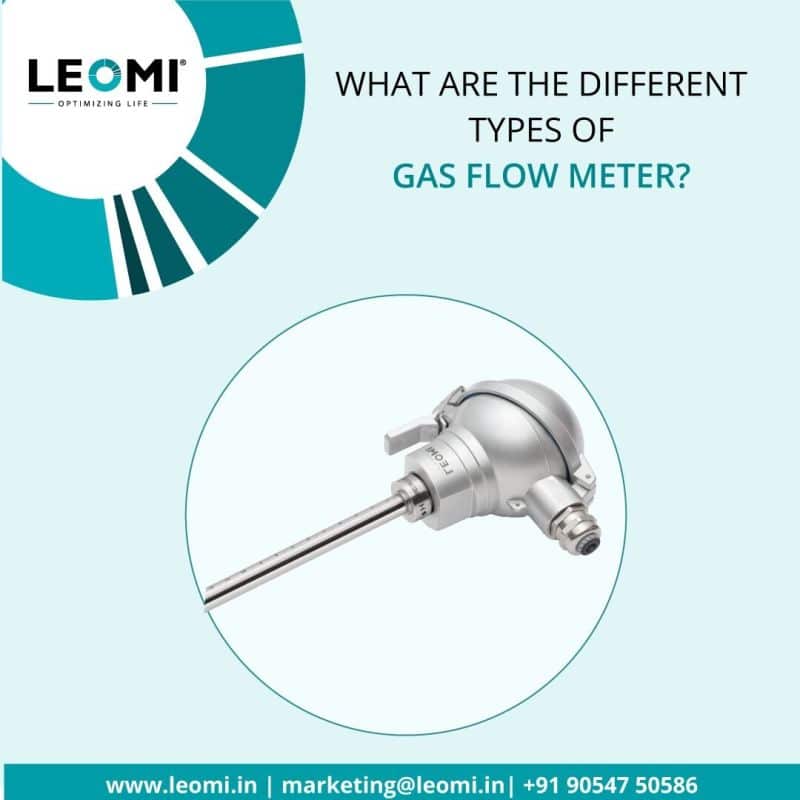
    1. Thermal mass flowmeters:- Thermal mass flowmeters are by far the most popular instruments for determining the mass flow of low gas flow. Since the introduction of these instruments in the mid-1970s, they have undergone considerable development, from analog to digital, from low flow to higher flow, and from applications in laboratories and machines to industrial environments and even hazardous areas. There is a suitable thermal mass flow meter for almost every low-flow gas application.
    2. Differential Pressure-Based Flow Meter:- Differential pressure meters work on the principle of partially obstructing the flow in a pipe. This creates a difference in the static pressure between the upstream and downstream sides of the device. This difference in the static pressure (referred to as the differential pressure) is measured and used to determine the flow rate.
    3. Coriolis flowmeter:- Coriolis flowmeter is based on the principles of motion mechanics. As fluid moves through a vibrating tube, it is forced to accelerate as it moves toward the point of peak-amplitude vibration. Conversely, decelerating fluid moves away from the point of peak amplitude as it exits the tube. The result is a twisting reaction of the flow tube during flowing conditions as it traverses each vibration cycle.
    4. Turbine flow meter:- Turbine Flow Meter is a volumetric measuring turbine type. The flowing fluid engages the rotor causing it to rotate at an angular velocity proportional to the fluid flow rate. The angular velocity of the rotor results in the generation of an electrical signal (AC sine wave type) in the pickup.
    5. Ultrasonic Flow Meter – Clamp On Type:- An ultrasonic flow meter construction can be done by using upstream and downstream transducers, sensor pipes, and reflectors. The working principle of the ultrasonic flow meter is, it uses sound waves to resolve the velocity of a liquid within a pipe. There are two conditions in the pipe like no flow and flowing. In the first condition, the frequencies of ultrasonic waves are transmitted into a pipe & its indications from the fluid are similar. In the second condition, the reflected wave’s frequency is dissimilar because of the Doppler Effect.
    6. Vortex Flow Meter:-  A vortex flow meter is a flow measurement device best suited for flow measurements where the introduction of moving parts presents problems. They are available in industrial grade, brass, or all-plastic construction. Sensitivity to variations in the process conditions is low and with no moving parts has relatively low wear compared to other types of flow meters.
  • Why Compressed Air Flow Measurement is Important?

    Why Compressed Air Flow Measurement is Important?

    Why Compressed Air Flow Measurement is important?

    Compressed air uses more electricity than any other type of equipment, and accounts for as much as a third of the energy usage in an industrial facility. Compressed air flow measurement in the industrial environment helps to track overall usage and identify leaks in compressed air systems, to help departments reduce consumption and improve plant efficiency. This can save a lot of energy and money each month in large industrial plants by reducing energy costs. Insertion Type Thermal Mass Flow Meters is a perfect tool to measure compressed airflow.

    Compressed air uses more electricity than any other type of equipment, and accounts for as much as a third of the energy usage in an industrial facility.

    Compressed air flow measurement in the industrial environment helps to track overall usage and identify leaks in compressed air systems, to help departments reduce consumption and improve plant efficiency.

    This can save a lot of energy and money each month in large industrial plants by reducing energy costs. Insertion Type Thermal Mass Flow Meters is a perfect tool to measure compressed airflow.

  • How Selecting the right flowmeter can help you minimize your annual energy costs

    How Selecting the right flowmeter can help you minimize your annual energy costs

    air flowmeter in India

    Choosing a flowmeter that creates low permanent pressure loss is most important in Compressor’s & Blowers’ requirements can reduce energy loss, increase efficiency & saves money.

    Airflow rate measurement & control is utmost in the textile, automobile, steel and power, chemical & pharmaceuticals process.

    Selecting an appropriate flow measurement technique can be a daunting task. If we are aware of technologies that are suitable for a particular application, minimizing energy costs can help narrow the choice.

    Pressure drop loss is a major concern as example Orifice flowmeter has approx 2psi -3psi pressure loss which is equal to 1-1.5% energy loss.

    LEOMI thermal mass (calorimetric) flowmeters work on the physical principle of thermal dispersion from a heated element to the ambient medium (e.g. air or gases). And it is a proven technology that provides great savings in energy costs by almost No permanent pressure loss & high turndown ratio to the plant operators hence helping in optimizing its process.

  • Challenges in gas flow measurement

    Challenges in gas flow measurement

    Challenges in Gas Flow Meter Measurement

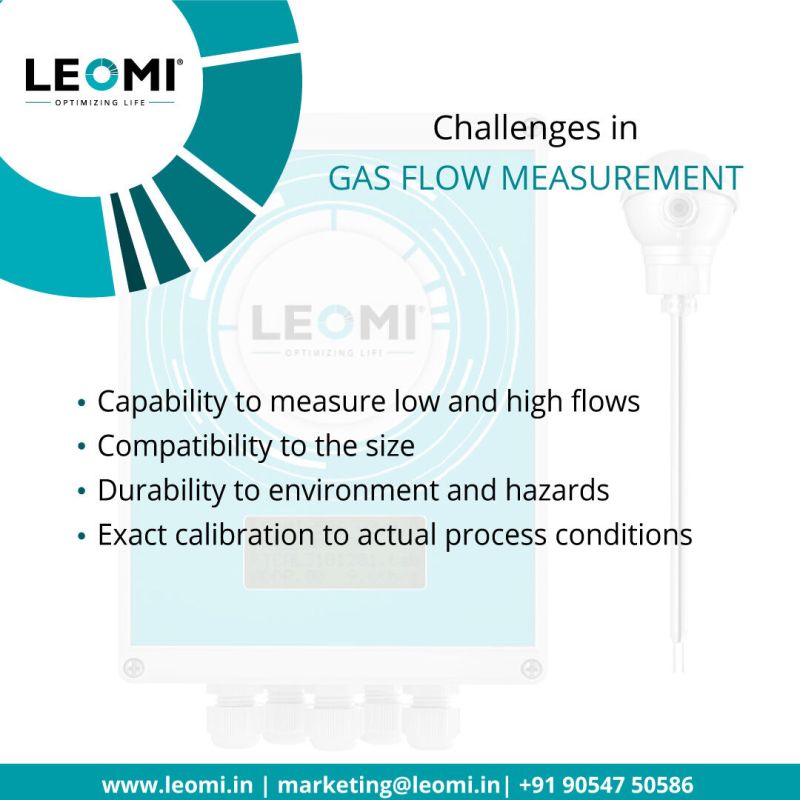
    For each gas flow meter application that demands gas flow measurement, different challenges might arise that require careful attention and consideration. Some of them include:

    • Capability to measure low and high flows: Required to measure the high and lower level of gas flows with precision.
    • Compatibility to the size: Special consideration should be taken as to the suitability of each flow-meter component to the implemented place, small or large.
    • Durability to environment and hazards: Environmental conditions that a flow sensor must reliably operate in.
    • Exact calibration to actual process conditions: It is essential for undisturbed operations.
  • Typical application of gas flow meter

    Typical application of gas flow meter

    Here are a few applications for Gas Flow Meters:

    1. Compressed Air
    2. Food Industries
    3. Chemical Applications
    4. Natural gas supplies
    5. Power Utilities
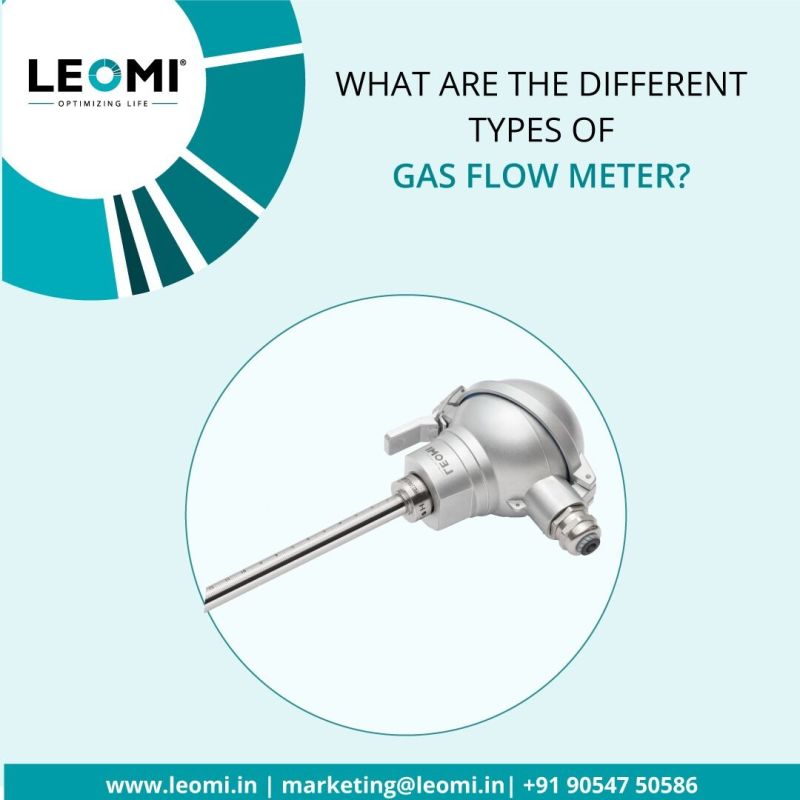
  • What are the different types of gas flow meter

    What are the different types of gas flow meter

    types of gas flow meters in india


    Different Types of Gas Flow Meters in India

    1. Thermal mass flow meter

    Thermal mass flow meters, thermal dispersion or immersible mass flow meters, or gas flow meters, are a type of instrument for measuring the rate at which fluid (usually air) passes through a pipe. The thermal part refers to the fact that the device is heated and differential (not absolute) in pressure across it will cause flow because of this temperature gradient, i.e., if the side without a pressure difference is hotter than the other side, then the flow will occur from hot to cold.

    2. Differential Pressure Based Flow Meter

    Differential Pressure flow meters measure velocities in fluids by reading the pressure loss across a pipe constriction. These meters can employ laminar plates, nozzles, or Venturi tubes to create an artificial constriction.

    3. Coriolis flow meter

    Coriolis mass flow meters are very useful to have around. It’s helpful when you have a large amount of liquid or even gas that needs to be measured. Coriolis mass flow meters help you get a good idea about how much fluid is passing through, and in which direction too. These meters are typically made out of metal, though there are versions available that can be used with liquids and gases that don’t react well to metal.

    4. Turbine flow meter

    A turbine Flow Meter is an instrument used to measure liquid flow in pipelines and tanks. It is also known as a rotating impeller flowmeter. The turbine meter uses the principle of measuring the rotary motion of a turbine, into an electrical signal.

    5. Ultrasonic Flow Meter (Clamp-on Type)

    Ultrasonic clamp-on flow meters measure flow to determine the transit time of a liquid or gas. Using sound waves for measurement, ultrasounds can accurately monitor changes in flow. Ultrasonic clamp-on flow meters are used for primary applications involving liquids, gasses, and other substances

    6. Vortex Flow Meter

    Vortex flowmeters operate using vortex shedding to determine the amount of water flow. The technology is based on the principle that vortexes are shed when an oscillating fluid flows past a bluff body, such as a sphere or disk which has been inserted into the fluid flow.

  • How to monitor flue gas flow rate accurately with a large stack diameter

    How to monitor flue gas flow rate accurately with a large stack diameter

    Accurate Flue Gas Flow Rate Measurement Solutions

    How to monitor flue gas flow rate accurately with a large stack diameter?

    Leomi-586 A single point Insertion thermal mass flow meter for a larger duct or stack diameter may not provide an accurate average velocity profile, for this purpose Leomi recommends using multiple instruments across flow profile for better averaging.

    As per installation standards suggestion, multiple thermal flow sensors can be mounted at equal distance in duct for achieving better accuracy.

  • Why is flue gas flow measurement so important?

    Why is flue gas flow measurement so important?

    Importance of Flue Gas Flow Measurement :

    Most flue gases emission contains air pollutants that are harmful to human health.

    So continuous emission monitoring systems (CEMS) are mandatory for providing reporting to the state & central pollution control board for environmental pollution control. Also, if flue-gas flow measurement is effectively done industries can take predictive & preventive measures for optimizing their process efficiency and reducing harmful emissions in the environment.