Category: Articles

Stay updated with the latest Air flow meter market news, Global Market Share, Trends, Analysis, and Forecasts with LEOMI Instruments.

  • The Importance of Precision: How Accurate Flow Measurement Enhances Biogas Production

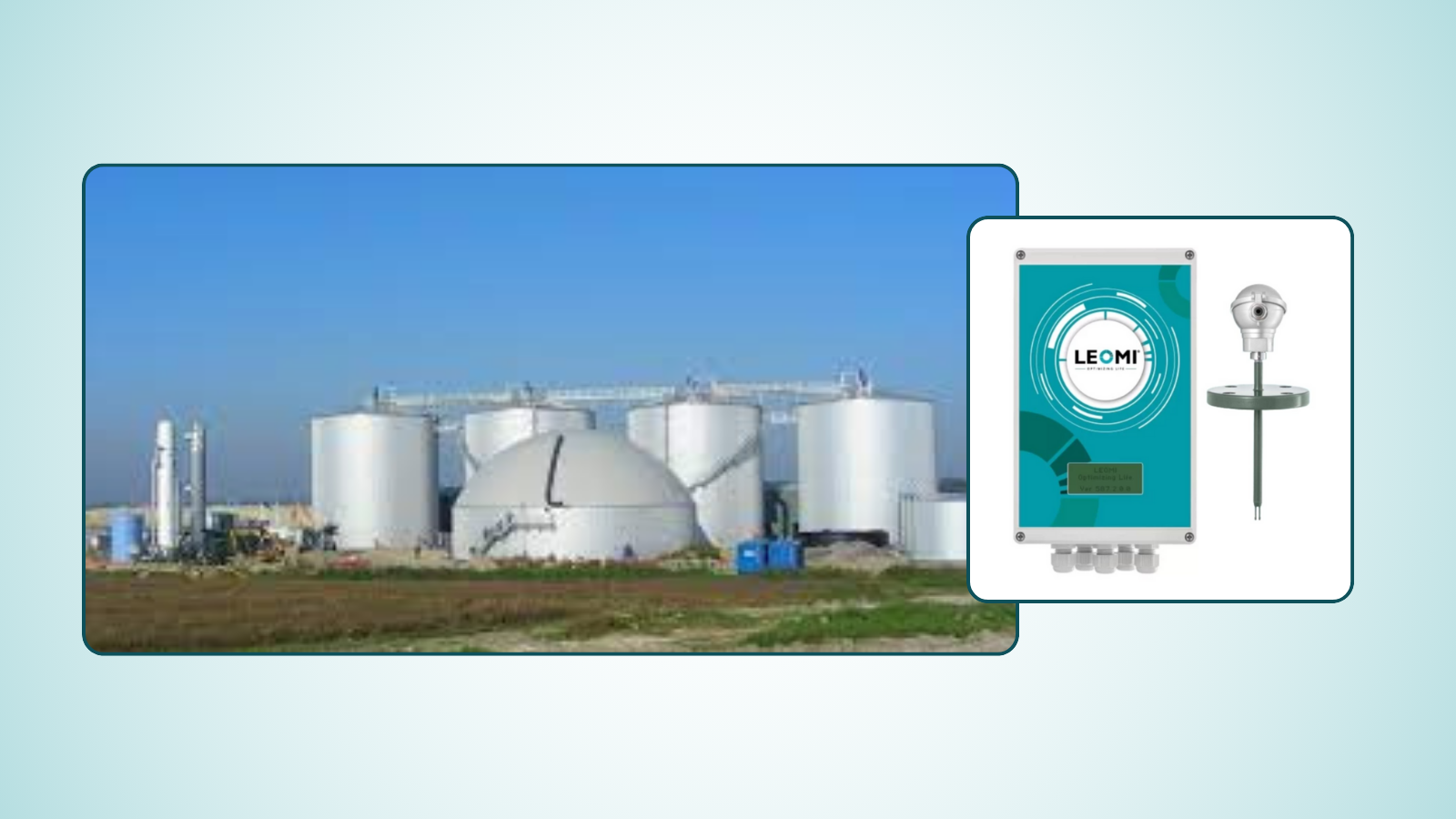
    The Importance of Precision: How Accurate Flow Measurement Enhances Biogas Production

    The Importance of Precision: How Accurate Flow Measurement Enhances Biogas Production

    Biogas production is an intricate process that converts organic waste materials into valuable renewable energy. This sustainable practice not only offers a pathway to generate energy but also plays a critical role in waste management and reducing greenhouse gas emissions. Central to optimizing the production and efficiency of biogas plants is the precision of mass flow measurement. Accurate mass flow measurement within these systems ensures that operational efficiencies are maximized and environmental impacts are minimized.

    Why is Flow Measurement Critical?

    Flow measurement in biogas production involves monitoring and controlling the amount of raw biogas that flows from the digester to storage and eventually as a CNG fuel or the point of use or energy conversion. The flowrate of biogas needs to be measured accurately for several reasons:

    1. Process Efficiency: Proper flow measurement allows operators to adjust and control the digestion process more effectively. It ensures that optimal conditions are maintained within the digester, promoting the microbial activity essential for methane production.
    2. Economic Performance: By ensuring that the flow rates are maintained within specified limits, operators can maximize the yield of methane, thereby improving the economic viability of biogas plants.
    3. Environmental Compliance: Precise measurement helps in monitoring the volume of greenhouse gases produced or Zero flaring, aiding compliance with environmental regulations.

    Challenges in Biogas flow measurement : 

    • Gas mixtures with varying H2S content
    • Too low flowrates in large pipe diameters
    • Varying moisture content and organic dirt

    Technologies for Accurate Flow Measurement :

    Several technologies are available for measuring the flow of biogas, each with its own set of advantages and challenges:

    • Thermal Mass Flow Meters: This measures mass flow rate independent of pressure and temperature variations and works in very low static pressures. Most effective in such environment for biogas flow measurements.
    • Ultrasonic Flow Meters: Non-contact measures time-of-flight of sound waves to measure volumetric flowrate. It works well in dry gas environment yet high cost solution.
    • Differential Pressure Meters: Traditional and rugged measures volumetric flowrate with differential pressure measurement across restriction flow element in pipe cross section. Widely used due to their simplicity and cost-effectiveness.

    Each technology offers different benefits, and the choice depends on specific plant requirements, including the nature of the biogas, budget constraints, and desired accuracy levels.

    The Role of Precision in Operational Success :

    The precision of flow measurements can directly impact the operational success of a biogas plant. Here are a few ways through which precision plays a pivotal role:

    • Optimized Feedstock Addition: Accurate flow measurements allow for precise control over the amount of feedstock added to the digesters. This control is crucial because too much or too little feedstock can disrupt the microbial balance necessary for efficient biogas production.
    • Enhanced Energy Recovery: By precisely measuring biogas flow, plants can optimize the usage of biogas in engines or boilers, thereby enhancing energy recovery and reducing wastage.
    • Preventive Maintenance: Accurate data on flow rates can help predict maintenance needs and potential system failures before they become critical, reducing downtime and maintenance costs.

    Conclusion:

    In conclusion, the importance of precision in the flow measurement of biogas cannot be overstated. It is a cornerstone for achieving high efficiency, safety, and profitability in biogas production facilities. As the industry grows and technologies advance, the focus on innovative measurement solutions that offer greater accuracy and reliability will likely intensify. For operators and stakeholders in biogas production, investing in high-quality flow measurement technologies is not just a technical necessity but a strategic asset that can define the success of their operations.

    This investment, combined with a deep understanding of the operational dynamics of biogas production, can lead to more sustainable and profitable outcomes, contributing significantly to the broader goals of renewable energy generation and environmental stewardship.

  • Optimizing Glass Production: The Role of Thermal Mass Flow Meters in Furnace Combustion Control

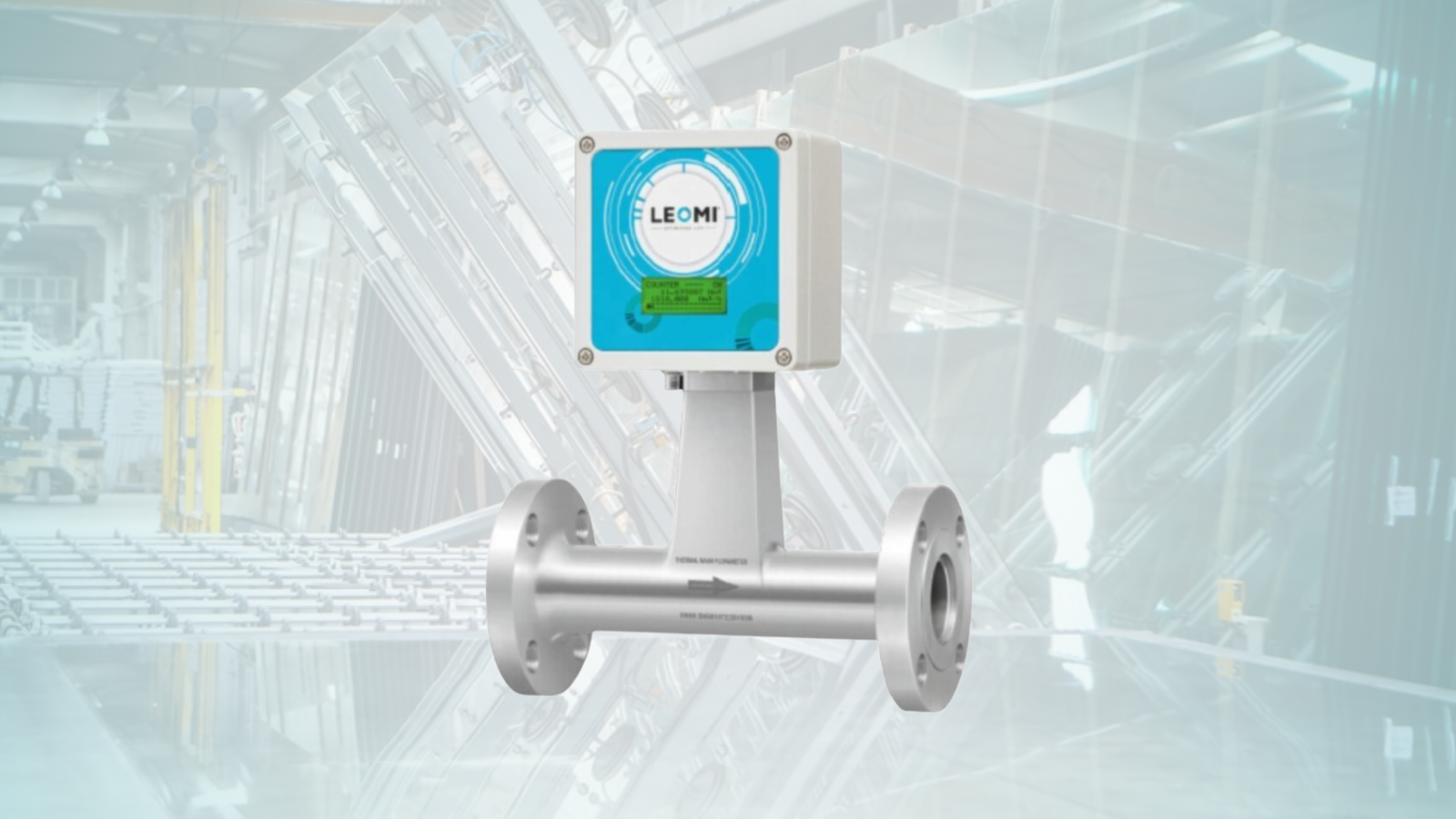
    Optimizing Glass Production: The Role of Thermal Mass Flow Meters in Furnace Combustion Control

    Introduction:

    The glass manufacturing industry relies heavily on the efficiency and stability of its furnace operations. Advanced control of air flow in furnace combustion processes not only enhances the production quality but also significantly cuts down on operational costs. This blog explores the application of thermal mass flow meters in regulating these processes, focusing on their impact on furnace longevity, fuel efficiency, and overall production efficacy.

    The Criticality of Controlled Air Flow in Glass Melting Furnaces:

    In the glass industry, the melting furnace is the heart of manufacturing operations. Modern glass furnaces, including regenerative side or end port furnaces and recuperative furnaces, benefit immensely from a controlled and stable combustion process. Achieving a stable combustion environment is crucial as it leads to improved furnace longevity and optimal fuel consumption, with potential energy savings up to 2%. This not only ensures a fast return on investment but also contributes to a more consistent quality in glass production.

    Challenges Of Thermal mass flow meters in Furnace Combustion Control:

    The glass furnace melting process is intricate and requires meticulous control over numerous variables. One of the primary challenges is managing the combustion control smoothly to avoid rapid changes that could introduce disturbances. Furthermore, the inherent reversal sequence in regenerative furnaces disrupts the control of combustion, despite providing an efficiency improvement of about 80%.

    Role of Thermal Mass Flow Meters in Combustion Furnace Control

    Thermal mass flow meters are pivotal in enhancing the control of air flow in furnace operations. These devices measure the mass flow rate of air directly at the inlet point of combustion, providing crucial data that helps maintain the correct air-to-fuel ratio—a key factor in achieving efficient combustion without producing harmful byproducts like carbon monoxide (CO).

    Fine-Tuning Combustion with Precision:

    The control of the air-to-fuel ratio in furnaces is sophisticated, requiring consideration of factors like parasitic air—air that leaks into the combustion process unintentionally. This is where thermal mass flow meters demonstrate their value. They help in accurately measuring the actual combustion air available, which is critical for adjusting the fuel/air ratio controller to operate close to the stoichiometric values (ideal theoretical points where fuel and oxygen burn completely).

    Benefits of Implementing Thermal Mass Flow Meters:
    1. Enhanced Fuel Efficiency: By providing accurate real-time data on the air flow, these meters allow for precise adjustments in the air-to-fuel ratio, leading to significant fuel savings and reduced environmental impact due to lower emissions of nitrogen oxides (NOx) and other pollutants.
    2. Reduced Operational Costs: The ability to maintain a stable and efficient combustion process reduces wear and tear on the furnace and extends its operational life, thereby lowering maintenance costs and downtime.
    3. Improved Product Quality: Stable combustion controls the heating environment within the furnace, leading to uniform glass production and higher quality end products.

    Conclusion:

    The integration of Thermal Mass Flow Meters into furnace operations in the glass industry marks a significant step towards modernizing and optimizing production processes. These devices play a crucial role in ensuring efficient, cost-effective, and environmentally friendly glass manufacturing. By empowering operators with the right technology and knowledge, the industry can achieve better control over its processes, leading to improved output and sustainability.
    In conclusion, the application of thermal mass flow meters in glass furnace combustion control not only addresses the technical challenges but also supports the industry’s move towards more advanced, reliable, and cleaner production techniques. 

  • Enhancing Boiler Efficiency and Safety: The Strategic Control of Secondary Air Flow to Coal Mills with Thermal Mass Flow Meters

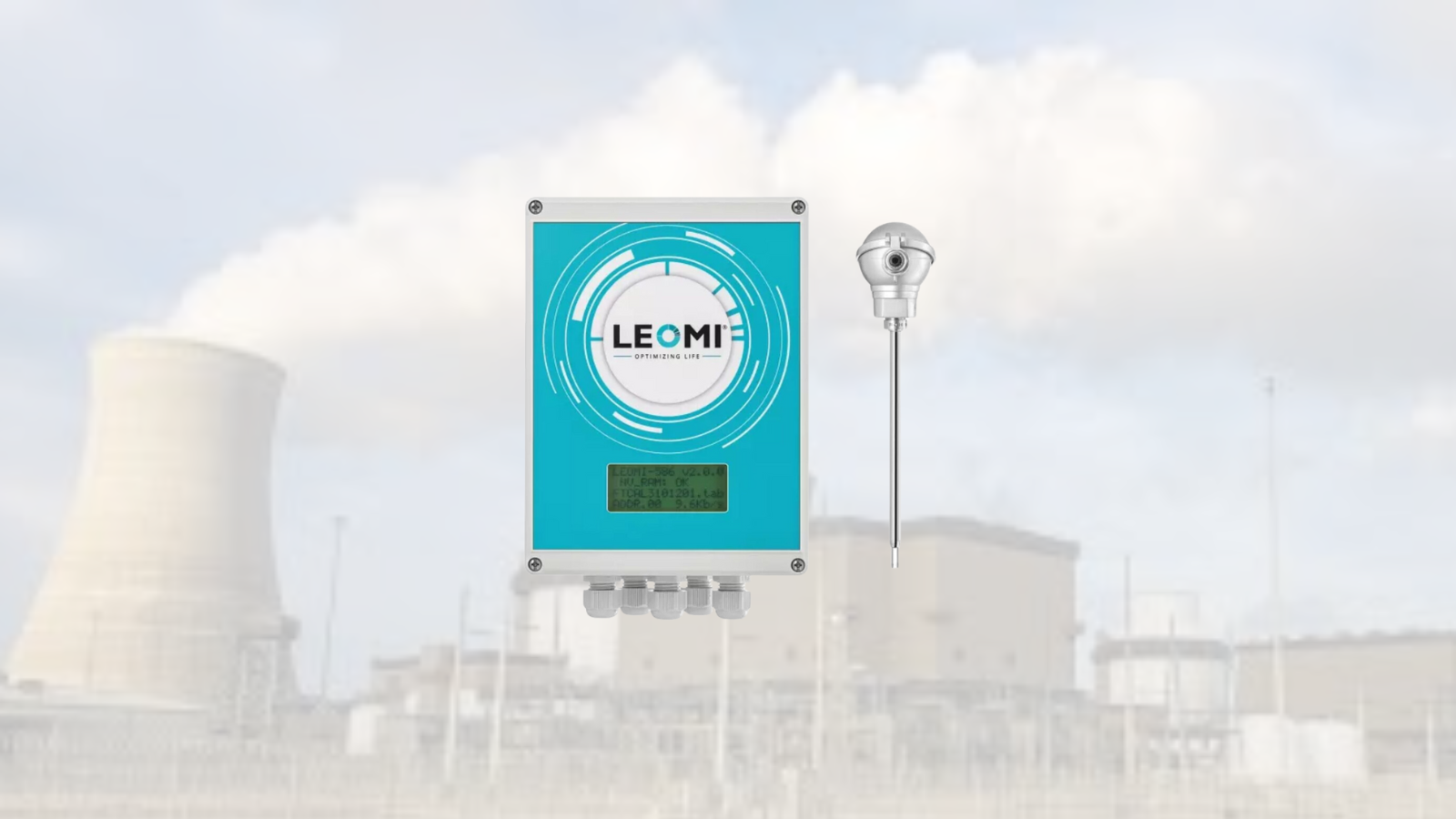
    Enhancing Boiler Efficiency and Safety: The Strategic Control of Secondary Air Flow to Coal Mills with Thermal Mass Flow Meters

    Introduction:

    In the quest for operational excellence in power generation, enhancing boiler efficiency while ensuring safety is paramount. One of the critical areas of focus is the optimization of primary air flow to coal mills, which plays a significant role in combustion efficiency and, consequently, overall boiler performance. This blog explores the strategic control of secondary air flow to coal mills using thermal mass flow meters, a technique that promises to optimize combustion, reduce emissions, and enhance safety.

    The Importance of Accurate Air Flow Measurement:

    The combustion process in coal-fired power plants involves the burning of pulverized coal in the presence of air. The air provided during this process is classified into primary and secondary air, where primary air is mixed with coal to form a combustible mixture, and secondary air is injected to sustain combustion. The strategic control of secondary air flow to coal mills using thermal mass flow meters offers a proven solution for enhancing boiler efficiency and safety. By providing accurate, real-time air flow data, The precise measurement and control of this secondary air are crucial because:

    • Optimal air-to-fuel ratio: Ensuring the correct proportion of air to fuel is essential for complete combustion. An imbalance can lead to unburned carbon, resulting in lower efficiency and higher emissions.
    • Temperature regulation: Excessive secondary air can lower the flame temperature, affecting the efficiency and formation of pollutants.
    • Safety: Proper airflow prevents potentially hazardous conditions like coal mill explosions, which can occur due to high concentrations of volatile gases in the mill.

    Working Principles of Thermal Mass Flow Meters:

    Thermal mass flow meters (TMFMs) provide a direct method for measuring the mass flow of air/gases, independent of temperature and pressure changes, making them ideal for boiler applications. Their principle of operation involves measuring the amount of heat dissipated due to air flow from a heated sensor is proportional to the mass flow rate.

    Benefits of TMFMs:

    1. High Accuracy and Rangeability: TMFMs offer excellent accuracy and high turn down ratio (100:1), crucial for maintaining the air-to-fuel ratio within tight tolerances.
    2. Direct Mass Flow Measurement: Unlike volumetric meters (DP Type), TMFMs measure the mass flow directly, which is necessary for process control.
    3. Low Maintenance: These meters have no moving parts and require less maintenance, reducing downtime and operational costs.
    4. Rapid Response Time: TMFMs provide quick readings, enabling real-time adjustments to the combustion process, and enhancing both efficiency and safety.

    Implementing TMFMs in Coal Mills:

    The implementation of TMFMs in controlling secondary air flow involves several strategic steps:

    • Installation Location: Meters are typically installed at strategic points where secondary air is injected into the boiler. This placement ensures the best representation of air flow that affects combustion.
    • Integration with Control Systems: TMFMs are integrated with the plant’s control system. This integration allows for automated adjustments to the air flow based on real-time data, optimizing the combustion process continuously.
    • Data Analysis and Adjustments: Continuous monitoring and analysis of data collected from TMFMs enable operators to make informed decisions about adjustments needed for improving efficiency and reducing emissions.

    Case Studies and Results:

    Several coal-fired power plants have reported improvements in boiler efficiency and reductions in emission levels after implementing thermal mass flow meters for controlling secondary air. These plants have observed:

    • A reduction in unburned carbon in fly ash by up to 50%.
    • Improved boiler efficiency by up to 2%, which translates to significant fuel savings over time.
    • Enhanced safety with a marked reduction in the incidence of mill explosions.

    Conclusion:

    TMFMs enable power plants to optimize combustion, reduce emissions, and operate safely. As the energy industry continues to focus on operational efficiency and environmental compliance, the role of advanced technologies like TMFMs becomes increasingly critical in achieving these objectives.

  • Maximizing Operational Efficiency: Precision Air Flow Measurement’s Role in Burner Optimization

    Maximizing Operational Efficiency: Precision Air Flow Measurement’s Role in Burner Optimization

    Introduction:

    In the industrial world, enhancing operational efficiency is critical. A key component of this is the optimization of burners used in power generation and manufacturing. Accurate air flow measurement is essential here, as it ensures the optimal mix of air and fuel, leading to better combustion, reduced waste, and lower emissions. Thermal mass flow meters are crucial tools in this process, offering precise data for fine-tuning these systems.

    The Need for Accurate Air Flow Measurement:

    Effective combustion control hinges on maintaining the right air-to-fuel ratio. If this ratio is off, it can lead to inefficient fuel use and increased emissions, including harmful pollutants like nitrogen oxides and carbon monoxide. Precise air flow measurement helps keep the air-to-fuel ratio within the ideal range, improving fuel efficiency and reducing emissions.

    Advantages of Thermal Mass Flow Meters:

    Thermal mass flow meters are vital for accurate airflow measurement. They provide several benefits.

    • Direct Mass Measurement: These meters measure the mass of air directly, which is more reliable than volume-based measurements that can be affected by temperature and pressure changes.
    • Accuracy: They offer the precision needed to keep the air-to-fuel ratio ideal, which is crucial for efficient combustion.
    • Durability and Low Maintenance: Thermal mass flow meters have no moving parts, making them more durable and reducing the need for frequent maintenance.
    • Quick Response: They quickly respond to changes in air flow, allowing for immediate adjustments to the combustion process.

    Industry Applications:

    Thermal mass flow meters are used in various industries. In power plants, they help manage boilers and furnaces more efficiently. In manufacturing, especially where processes like drying or heat treatment are critical, these meters help maintain the right combustion levels to ensure product quality and process reliability.

    Implementing Thermal Mass Flow Meters:

    While integrating thermal mass flow meters can be challenging—requiring system calibration, integration with existing systems, and training for staff—the long-term benefits include better operational efficiency, cost savings, and compliance with environmental standards.

    Conclusion: Leomi Thermal Mass Flow Meters

    For industries aiming to improve efficiency and meet environmental regulations, precise tools like Leomi Thermal Mass Flow Meters are invaluable. Leomi meters are known for their accuracy, reliability, and ease of use, making them a top choice for businesses looking to optimize their combustion processes. Using Leomi meters can significantly enhance operational performance and help industries stay competitive in a tough economic landscape.

  • Enhancing Operational Efficiency in Coal-Fired Power Stations with Thermal Mass Flow Meters

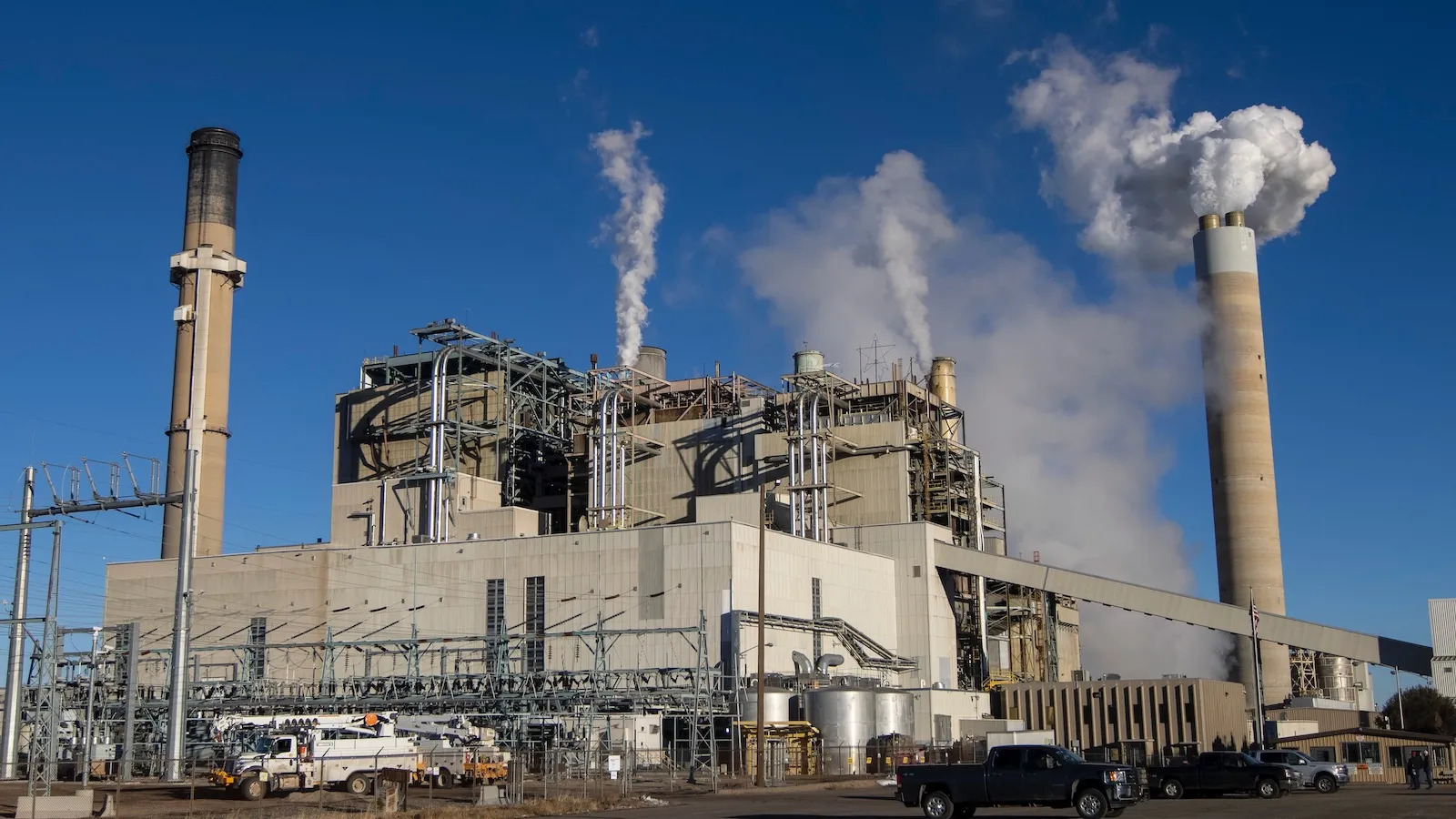
    Enhancing Operational Efficiency in Coal-Fired Power Stations with Thermal Mass Flow Meters

    Introduction:

    In the energy sector, efficiency is not just an operational goal but a necessity, especially in coal-fired power stations where the balance between energy production, cost management, and environmental responsibility is crucial. One of the technologies playing a pivotal role in optimizing operational efficiency in these facilities is the Thermal mass flow meters. This instrument is essential for improving fuel handling and combustion processes, thereby enhancing overall system performance.

    Understanding Thermal Mass Flow Meters: 

    Thermal mass flow meters are designed to measure the mass flow rate of a fluid moving through a pipe or conduit. Unlike volumetric flow meters, which measure the volume of fluid passing through per unit time, thermal mass flow meters measure the mass of fluid per unit time. This is particularly important in applications like coal-fired power stations where the precise amount of air to coal ratio directly influences combustion efficiency.

    The working principle of a thermal mass flow meter involves heat transfer. The device consists of two sensors: a heated sensor and a temperature sensor. As the fluid (in this case, air or gas) flows past these sensors, it causes a cooling effect proportional to the mass flow rate of the fluid. The meter then calculates the mass flow rate based on the amount of electrical power required to maintain a constant temperature difference between the two sensors.

    Benefits of Thermal Mass Flow Meters in Coal-Fired Power Stations:
    1. Improved Combustion Efficiency: 

      Accurate air-to-fuel ratio is crucial for optimal combustion. Too much air can lead to heat loss, and too little can cause incomplete combustion and higher emissions. Thermal mass flow meters provide precise measurements of air flow into the combustion chamber, enabling better control over the combustion process, reducing waste, and minimizing emissions.

    2. Reduced Fuel Costs :

      By optimizing the combustion process, power stations can make more efficient use of coal. This precision prevents overuse of fuel and reduces the cost associated with purchasing and transporting excess coal. Over time, these savings can be significant.

    3. Enhanced Environmental Compliance: 

      Regulations on emissions are becoming stricter worldwide. Efficient combustion reduces pollutants like nitrogen oxides (NOx) and sulfur dioxide (SO2), which are common byproducts of coal combustion. By ensuring more complete combustion, thermal mass flow meters help facilities meet these regulatory requirements more consistently.

    4. Maintenance and Operational Reliability:

      Thermal mass flow meters have no moving parts, which minimizes maintenance needs and enhances reliability. Their robustness and durability make them ideal for the harsh environments found in coal-fired power stations.

    Implementing Leomi Instruments Thermal Mass Flow Meters:

    When integrating thermal mass flow meters, it’s important to consider the specific environmental conditions and installation requirements. Proper calibration and installation are crucial to ensure accuracy. Choosing high-quality meters like those from Leomi Instruments can further enhance this assurance. Leomi Instruments’ thermal mass flow meters are renowned for their precision and durability, designed specifically to withstand the rigorous conditions of coal-fired power plants. These meters not only provide accurate, real-time data for optimizing fuel and air ratios but also support ongoing maintenance and operational reliability with their advanced diagnostic features.

    Conclusion:

    As coal-fired power stations seek ways to enhance efficiency while reducing operational costs and environmental impact, thermal mass flow meters stand out as a valuable tool. Leomi Instruments’ thermal mass flow meters, in particular, offer the robustness, precision, and features needed to fine-tune processes, optimize combustion, and improve the overall economics of power generation. Implementing such technologies is a step forward in not just meeting but exceeding today’s energy challenges.

    choice in the industry.

  • Enhancing NOx Reduction in Thermal Power Plants

    Enhancing NOx Reduction in Thermal Power Plants

    The Strategic Role of Flue Gas Recirculation (FGR) and the Use of Insertion Thermal Mass Flow Meters

    Introduction:

    Thermal power plants are essential for meeting global energy demands but also present significant environmental challenges, particularly with nitrogen oxides (NOx) emissions. These pollutants critically impact air quality and public health. Flue gas recirculation (FGR) is a proven strategy to mitigate these emissions by recirculating exhaust gases back into the combustion chamber. This blog examines how FGR flow management, specifically through the use of insertion thermal mass flow meters, can significantly enhance NOx reduction efforts.

    The Basics of Flue Gas Recirculation (FGR) in NOx Control

    Flue Gas Recirculation (FGR) reduces NOx emissions by diluting the oxygen concentration and lowering combustion temperatures in the combustion chamber. The technique’s success hinges on precise control and measurement of the recirculated gas flow, which directly affects combustion dynamics and efficiency.

    Challenges in FGR Implementation:

    Implementing FGR is challenging due to several factors:

    • Flow Rate Accuracy: Accurate flow rates are crucial for effective NOx reduction while maintaining operational efficiency.
    • Variable Gas Compositions: Fluctuating gas compositions can complicate flow measurement due to changes in gas density and flow characteristics.
    • Thermal and Mechanical Stresses: High temperatures and the corrosive nature of flue gases can degrade flow measurement instruments.

    The Critical Role of Insertion Thermal Mass Flow Meters:

    Insertion thermal mass flow meters address these challenges by measuring gas flow based on thermal properties. Key benefits include:

    • Direct Mass Flow Measurement: These meters measure mass flow directly, which is unaffected by temperature and pressure changes, ensuring accurate flow measurements.
    • Minimal Pressure Drop: They introduce minimal pressure drop, crucial for maintaining FGR system efficiency.
    • Robust Design: They are capable of withstanding harsh environments, ensuring reliable performance under typical flue gas conditions.

    Advantages Over Conventional Technologies:

    Insertion thermal mass flow meters offer several advantages over traditional flow measurement technologies:

    • Installation Flexibility: They can be easily inserted into existing pipelines, reducing downtime and installation costs.
    • Low Maintenance: With no moving parts, these meters require less maintenance and offer enhanced long-term reliability.
    • Real-time Data for Better Control: Providing real-time flow data, these meters enable dynamic adjustments to the FGR system for optimal NOx control and operational efficiency.

    Best Practices for Implementing FGR Systems:

    Best practices for effective FGR system implementation include:

    • Proper Meter Selection: Select meters based on specific flue gas characteristics and operational requirements.
    • Regular Calibration and Maintenance: Maintain meter accuracy and longevity through regular checks and upkeep.
    • Integration with Plant Control Systems: For real-time monitoring and adjustments, integrate flow meters with automated plant control systems.

    Conclusion:

    Effective FGR flow management is crucial for reducing NOx emissions in thermal power plants. Insertion thermal mass flow meters, particularly models like the Leomi Insertion Thermal Mass Flow Meter, offer a sophisticated solution for precise flow measurement and control, enhancing the efficiency of FGR systems. The Leomi meter is recognized for its accuracy, durability, and ease of integration, making it a significant advancement in flow measurement technology.

    Leomi Thermal Mass Flow Meters are specifically designed for the challenging environments of thermal power plants. They are highly effective in measuring flue gases due to their ability to provide accurate mass flow measurements, cost-effective solutions for large duct calibrations, and customized sensor options. Their simple design ensures easy operation and minimal maintenance, while their capability to handle a wide range of flow measurements makes them highly adaptable to various operational needs.

    Adopting such innovative solutions as the Leomi meters is essential for thermal power plants aiming to meet stricter environmental regulations and improve overall operational efficiency. This strategic implementation not only aids in compliance but also boosts the performance and sustainability of power generation facilities, making Leomi a preferred choice in the industry.

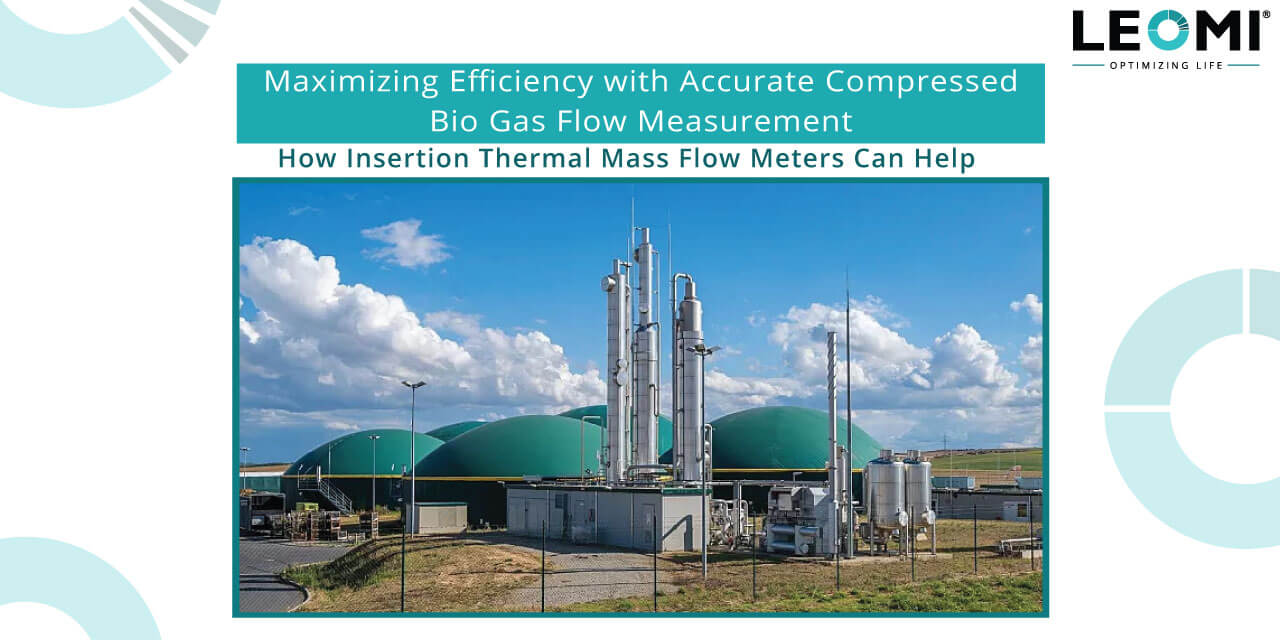
  • Maximizing Efficiency with Insertion Thermal Mass Flow Meters for Bio Gas Flow Measurement

    Maximizing Efficiency with Insertion Thermal Mass Flow Meters for Bio Gas Flow Measurement


    Biogas is a renewable energy source that can be produced from various organic waste materials. To maximize the efficiency of biogas production and ensure optimal energy management, it is crucial to have accurate and efficient compressed biogas flow measurement systems in place.

    One of the most reliable and cost-effective techniques for biogas flow measurement is the insertion of thermal mass flow meters. In this blog post, we’ll explore the advantages of using insertion thermal mass flow meters for biogas flow measurement.


    The Importance of Accurate Biogas Flow Measurement

    The measurement of biogas flow is essential for efficient energy production and management. Accurate compressed biogas flow measurement helps to optimize process control, reduce costs, and ensure safety. Inaccurate measurement of biogas flow can lead to reduced energy output, damage to equipment, and safety hazards.

    Moreover, precise biogas flow measurement is critical for complying with regulatory requirements and ensuring accurate reporting.


    Advantages of Using Insertion Thermal Mass Flow Meters

    Insertion thermal mass flow meters are an excellent choice for biogas flow measurement due to several advantages.

    Firstly, insertion thermal mass flow meters provide high accuracy and repeatability, even in applications with varying gas composition and temperature. They are also insensitive to pressure changes and provide real-time measurement of gas flow rate and totalized flow. It works quite well at too-low static pressure. It is adjustable to various pipe diameters.

    Furthermore, insertion thermal mass flow meters are easy to install, require low maintenance, and do not require additional pressure or temperature compensation devices. Overall, the insertion of thermal mass flow meters provides a cost-effective and reliable solution for biogas flow measurement.


    Best Practices for Using Insertion Thermal Mass Flow Meters for Biogas Flow Measurement

    To ensure accurate biogas flow measurement with the insertion of thermal mass flow meters, it is essential to follow best practices. For instance, the insertion point of the flow meter should be located in a section of the pipe where the flow is fully developed and not affected by turbulence or obstructions.

    The flow meter should also be calibrated regularly and verified against a reference standard. Additionally, proper installation of the flow meter, including orientation and depth, can affect its accuracy and should be carefully considered.


    Applications of Insertion Thermal Mass Flow Meters in Biogas Flow Measurement

    Insertion thermal mass flow meters have a wide range of applications in biogas flow measurement, including biogas plants, landfills, wastewater treatment plants, and agricultural operations.

    In biogas plants, insertion thermal mass flow meters are used to monitor the feedstock and optimize the fermentation process, resulting in increased gas yield and quality. In landfills, insertion thermal mass flow meters are used to monitor the gas generated by organic waste decomposition and ensure compliance with environmental regulations.

    In wastewater treatment plants, insertion thermal mass flow meters are used to monitor the waste gas produced during the digestion process and optimize energy recovery. In agricultural operations, insertion thermal mass flow meters are used to monitor the gas produced from manure and optimize biogas production.


    Conclusion

    In conclusion, insertion thermal mass flow meters are an excellent choice for biogas flow measurement due to their high accuracy, repeatability, and cost-effectiveness.

    Following best practices for installation and calibration can ensure accurate measurement and optimize energy production and management in various industries and applications. Insertion thermal mass flow meters offer a reliable and efficient solution for biogas flow measurement, providing significant benefits for both the environment and the bottom line.

    At Leomi Instruments, we offer a wide range of high-quality insertion thermal mass flow meters for biogas flow measurement. Our products are designed to provide accurate and reliable measurements in various applications, ensuring optimal energy management and compliance with regulatory requirements.

    We also offer expert installation and calibration services, ensuring that our products perform at their best. Contact us today to learn more about our biogas flow measurement solutions and how we can help maximize efficiency in your operations.

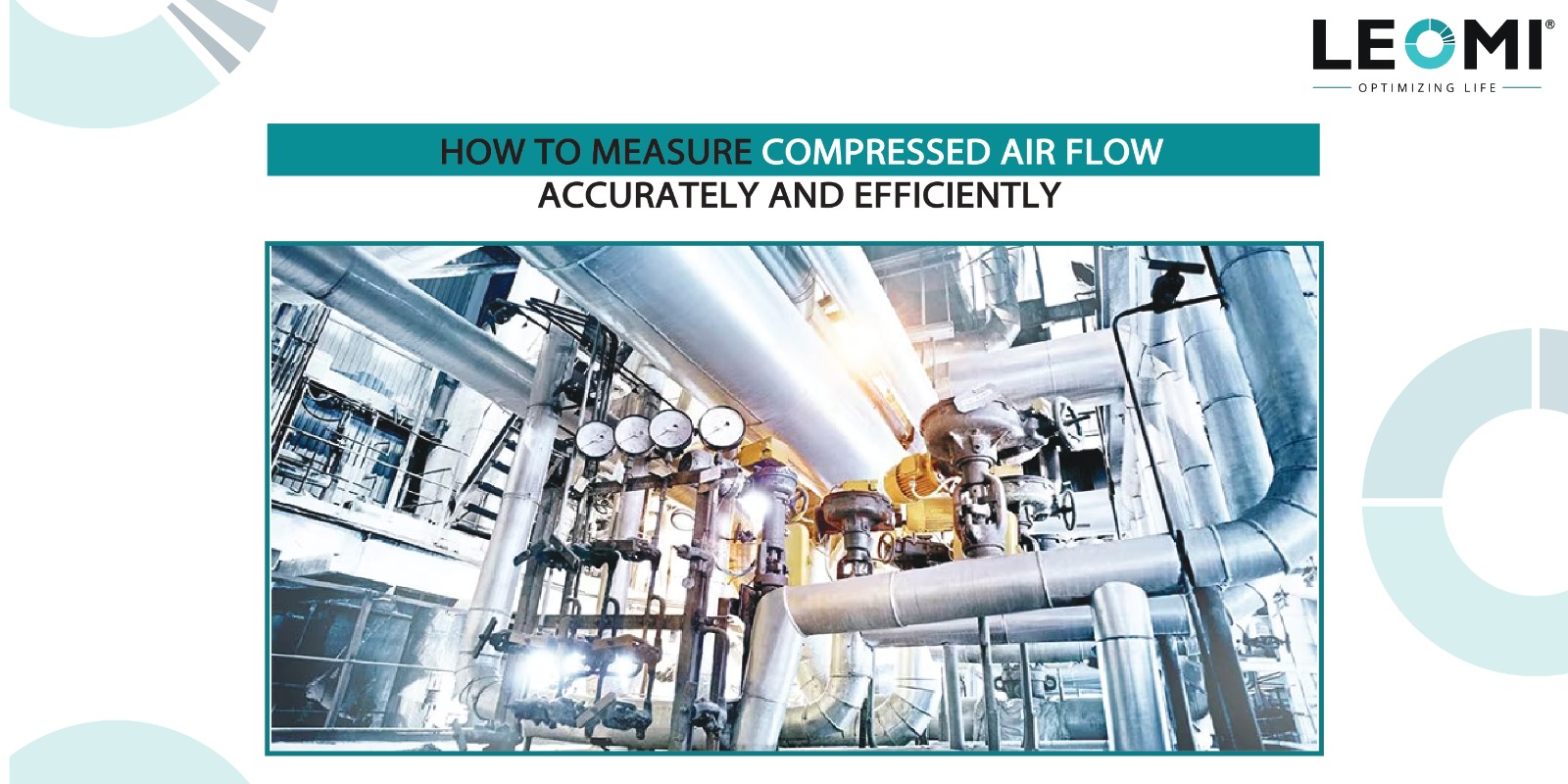
  • How to Measure Compressed Air Flow Accurately & Efficiently?

    How to Measure Compressed Air Flow Accurately & Efficiently?


    Compressed Air Flow is a vital resource in various industrial applications from operating pneumatic tools and machinery for performing required functions either in production or processes.

    However, managing compressed air usage can be challenging as it is often one of the most expensive forms of energy used in a facility. One of the key factors in managing compressed air usage is the accurate measurement of compressed air flow rate.


    Why accurate measurement of compressed air is important?

    Accurate measurement of compressed air flow is essential for industrial facilities in several ways.

    1. Optimizing the operation of compressed air systems: By monitoring the flow rate, facilities can identify and correct leaks, adjust compressor settings, and reduce the use of unnecessary air. This can result in significant cost savings, as compressed air is often one of the most expensive energies used in a facility.
    2. Improving Efficiency of equipment and processes: For example, in a paint spray booth, the compressed air flow rate must be carefully controlled to ensure that the paint is applied evenly. If the flow rate is too low, the paint will be poorly atomized and will not be applied evenly. If the flow rate is too high, the paint will be over-atomized, resulting in wasted paint and higher costs.
    3. Compliance with Industry Standards: Accurate flow measurement is also necessary to meet industry standards and regulations, such as ISO 50001 for energy management and OSHA regulations for employee safety.
    4. Leak Detection and Reduction: Accurate flow measurement enables real-time monitoring of compressed air usage and a higher turndown ratio helps to identify and reduce leaks in compressed air systems, reducing energy consumption and costs.
    5. Energy Management: Accurate flow measurement is essential for effective energy management and tracking energy usage in compressed air systems, helping facilities meet energy efficiency targets and reduce costs.


    What is Insertion Thermal Mass Flowmeter?

    Insertion thermal mass flowmeters are nowadays becoming one of the most reliable and accurate ways of measuring compressed air flowrate. These meters use the principle of thermal dispersion to measure the flow of real gases, including compressed air.

    It works on King’s Law where a thermal sensor having two pt-100 sensors one having a heater sensor & another reference sensor that maintains constant differential temperature is installed in a compressed air pipeline. The higher the air mass flow rate higher the cooling effect of the heater sensor which is directly proportional to heater power consumption. The rate of change of mass flow rate is directly related to heater power consumption.

    Insertion thermal mass flowmeters are highly accurate and have a NO pressure drop & higher turndown ratio making them well-suited for use in compressed air systems.


    Conclusion

    Overall, accurate measurement of Compressed Air Flow is essential for optimizing the operation of compressed air systems, improving efficiency, and ensuring the safety of industrial operations.

    Insertion thermal mass flowmeters are an ideal solution for measuring compressed air flow, providing high accuracy and No pressure drop. They are an ideal solution for industrial facilities that want to reduce energy consumption and costs, improve equipment and process efficiency, and ensure the safety of their operations.

    Contact us to accurately measure Compressed Air Flow at your plant.

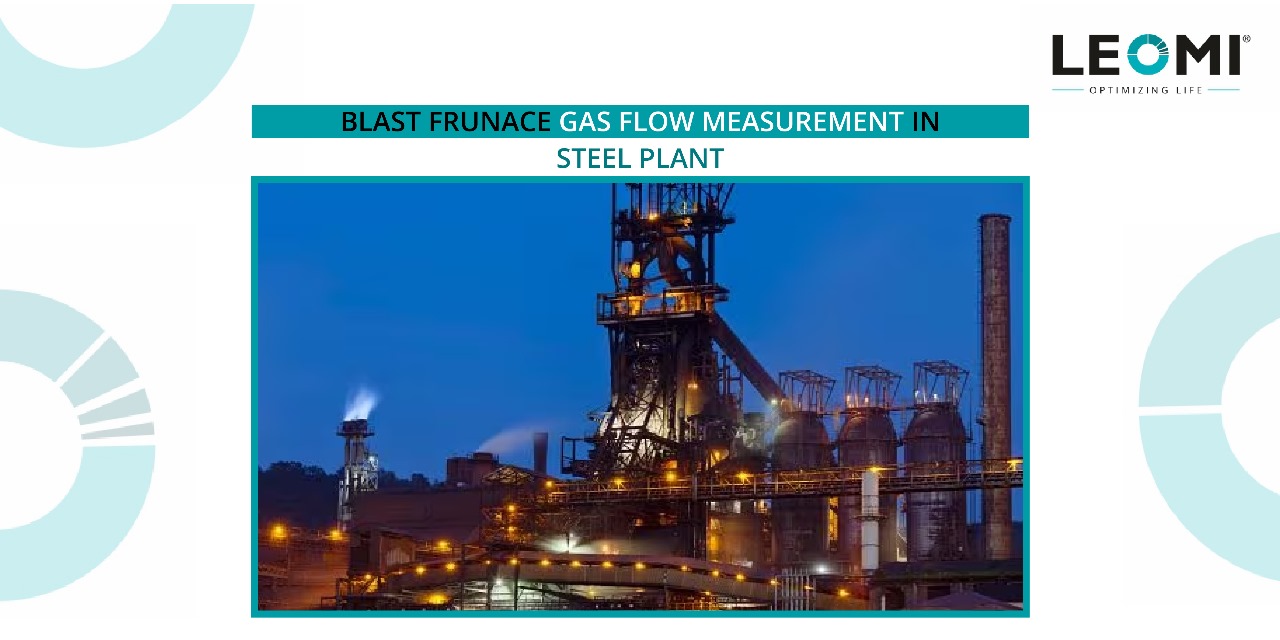
  • Blast Furnace Gas Flow Measurement in Steel Plant

    Blast Furnace Gas Flow Measurement in Steel Plant

    In steel industries Blast furnaces have a key role in smelting iron ore together with fuel (coke) and flux (limestone) continuously supplied from the top of the furnace. Hot blast air with oxygen enrichment is blown into the lower section of the furnace through a series of pipes (tuyeres). This results in chemical reactions while material falls downwards in the furnace.

    Flue gas ( Blast furnace gas) a low calorie will exit from the top of the furnace which in turn is used in other low heating furnaces in other steel processes. Blast furnace gas typically consists of mainly N2(50-55%), CO (20-25%), CO2(16-18%) etc. It contains some moisture content and carbon particle dirt sticky in nature but cleanable.

    Leomi provides a Leomi-586 Insertion Thermal Mass flowmeter which works excellent in these demanding applications against existing Orifice Or Averaging Pitot tube-based DP type flow transmitters.

    The major advantage of Insertion Thermal Mass flowmeter in this application:

    • Measures too low velocity of 0.6m/s or less & No pressure drop
    • Easy installation in minimum time for large pipe diameter
    • Easily removable sensor probe for periodic cleaning when needed

    A major limitation of existing DP-type Flow meter in use:

    • Significant pressure drop limits low flow range measurement
    • Difficult to install and also time-consuming with the high initial cost
    • Non-removable design is difficult for such application

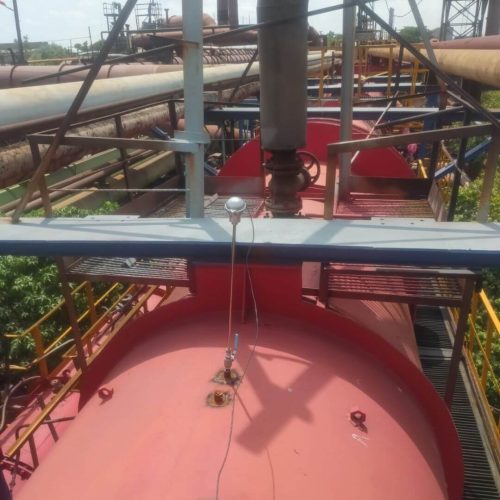
    Leomi-586 Installation in Blast furnace gas application large pipe

  • Advancement in Air & Process Gas Flow Monitoring in Cement Plants for Process Optimization

    Advancement in Air & Process Gas Flow Monitoring in Cement Plants for Process Optimization


    Cement Industry is one of the crucial core sectors for the development of construction and infrastructure with currently approx. 4.4 billion Tonnes of cement was produced in the world in the year 2021. The largest cement producer is China with more than 55% capacity and thereafter India accounts for the second largest product with around 7% of capacity.

    After the COVID-19 pandemic, there was a sudden rise in demand from rural and urban infrastructural developments across the world and mostly in undeveloped countries. Initiatives such as the Smart City project by India will see a long-term demand for cement products which will see huge technological upgradation of existing cement plants for cost and energy optimization.

    The cement industry is one of the most intensive energy consumers in the industrial sectors. Energy consumption represents 40% to 60% of production costs. Additionally, the cement industry contributes around 5% to 8% of all man-made CO2 emissions. Due to increasing demand efficiency and optimization will be the key criteria for today’s cement plant operators which will largely depend on the accurate and repeatable measurement of various process parameters such as Temperature, Pressure, Flow Rate & Level, etc.

    In the cement industry generally pressures, temperatures are used for calculating process gas flows in correlation with Fan/Blowers’s speed & power consumption, however, this is an assumption that generates high uncertainties against the actual gas flow rate and energy consumption of prime mover such as Fan/Blowers.

    There is an urgent need for optimum control of Air and process gas flow monitoring for improving the overall quality of cement, efficiency, and cost optimization for many process requirements as below:

    1. PREHEATER PROCESS EXHAUST GAS FLOW RATE MEASUREMENT

    Cyclone Preheaters are used before rotary kilns of cement production plants to heat the raw mix and drive off carbon dioxide and water before it is fed into the kiln. The quality of the preheater in a cement plant directly affects the stability of calcining temperature and cement clinker quality in the kiln. Measuring the exhaust gas flow rate in the downcomer can help in fine control of the ID Fan downstream for optimum control of the O2 content of the kiln off gas.

    Exhaust gas flow measurement generally is challenging due to the large diameter of the duct, high dust concentration, and high temperatures around 350⁰C-400⁰C. Generally, velocity is measured temporarily by Pitot tube with high uncertainties for cross-checking which doesn’t help in the efficient control of the process.

    2. CLINKER COOLER AIR FAN FLOW RATE MEASUREMENT

    The clinker cooler is a key device in the clinker production line which helps in quenching and transports the hot clinkers discharged from the rotary kiln and supplies hot air for the rotary kiln and preheater system. As the first equipment where high-temperature clinker releases heat, it plays an indispensable role in reducing coal and power consumption, increasing secondary and tertiary air temperature, and improving heat recovery rate.

    A good clinker cooler can help cement plants reduce energy consumption from two aspects: one is to improve the cooling efficiency and reduce the power consumption of the clinker cooler itself; the other is to reduce the coal consumption of rotary kiln and preheating systems by improving the heat recovery rate. Clinker cooler grate air fan efficient control is vital in achieving cooling efficiency and energy saving with a higher cooling rate concerning feed rate adjustment. Continuous cooling air flow rate measurement plays an important role in optimizing the operation of a clinker cooler.

    Measurement of a cooler air fan is a challenging task due to the high concentration of clinker dust with a high abrasion rate where flow sensors need to be robust and immune to high abrasion resistance. Currently, this application has a limited flow solution and less life expectancy about 1-6 months.

    3. AQC BOILER & PHP PROCESS GAS OUTLET FLOW MEASUREMENT

    Modern cement plants are equipped with Waste heat recovery (WHR) power plants installed in cement plants, using the heat generated through rotary kiln preheater (PH) and AQC exhaust hot gases for power generation. Waste heat recovery systems (WHRS) wherein hot waste gas heat from rotary kiln preheater & clinker cooler is fed to Preheater (PH) Boiler & After quenching chambers (AQC) boilers to recover heat energy for running boilers for electricity/power generation with the help of steam turbines. Typically, the 20 to 30 percent power requirement of the cement plant can be fulfilled using this waste heat for power generation applications, which is a substantial savings/reduction in the overall cost of production.

    Efficient control of PH & AQC Boiler needs an accurate and reliable inlet or outlet gas flow rate which demands a flow measurement device suitable for high temperature and abrasion resistance design.

    4. PRIMARY AIR FAN FLOW MEASUREMENT IN POWER GENERATION BOILERS

    Cement Plant is installed with Captive Coal Power Plant for fulfilling additional needs of electricity apart from AQC & PH Waste heat recovery Boilers. Primary airflow into the boiler is important to monitor for maintaining optimum stoichiometric air-to-fuel ratio for achieving efficient combustion efficiency. A reliable and accurate primary air flow measurement is needed which has low-pressure drop and works well at low static pressure and low maintenance.

    5. PROCESS & FLUE GAS FLOW MEASUREMENT IN EXHAUST STACK

    Exhaust process flue gas from clinker cooler and boiler needs to be monitored by the pollution control authority for keeping control on emission guidelines is a must. This needs accurate and reliable flow measurement solutions which will help in achieving high thermal efficiency and improve ESP performance & help to regulate harmful pollutants emission controls & provides useful information on optimizing mass balance.

    6. COMPRESSED AIR MEASUREMENT FOR UTILITY CONTROL AND CONSERVATION

    Compressed air is used as a utility in cement plants for the efficient operation of pneumatic equipment used in packing plants and other miscellaneous use needs to be monitored as it is invisible energy as for producing 4 scfm compressed air one horsepower (HP) electrical energy is consumed.
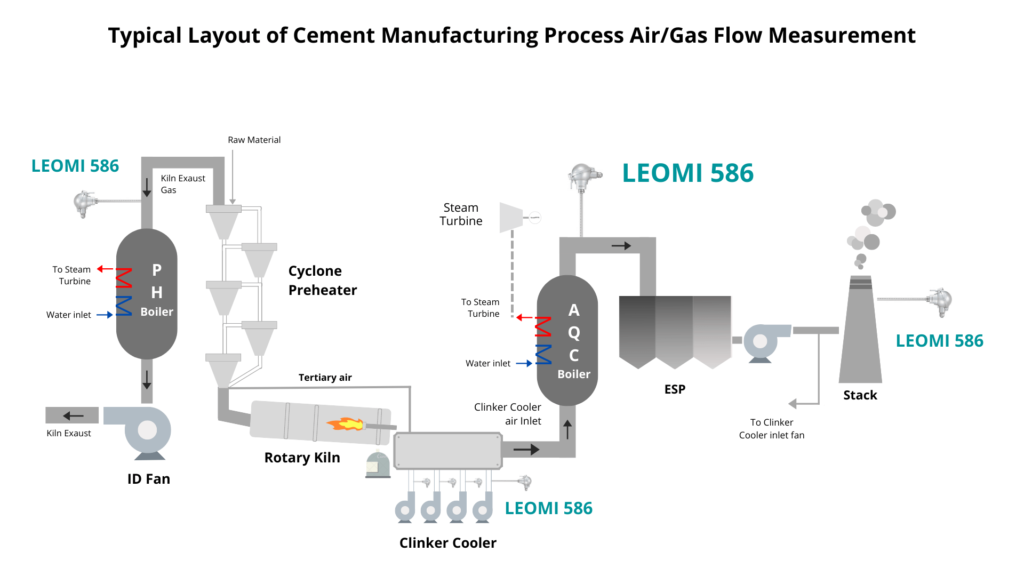
    cement manufacturing process air or gas flow measurement

    An accurate air & gas flow measurement in cement production helps in

    • Reducing Blower (ID/FD Fan) power consumption i.e., energy saving
    • Controlling the accurate and repeatable operation of kiln & improving clinker production quality
    • Improves energy efficiency of Clinker cooler fan & energy conservation

    Major Challenges in existing flow measurement solutions for the above applications

    • High-pressure drop means energy loss
    • Lower turn-down ratio implies limited operational range and leakage insensitive.
    • Lower accuracy & measurement resolution implies limited efficiency & performance analysis
    • Clogging and high wear factor
    • High cost of installation & needs frequent maintenance.

    Overcoming above challenges by advance proven calorimetric (heat dissipation) technology:

    Nowadays Insertion Thermal Mass (Heat dissipation) Flow meter technology is gaining technical ground for solving above limitations of existing conventional pitot tube or annbar differential pressure-based flow measurement.

    Insertion Thermal Mass Flowmeter

    Working Principle

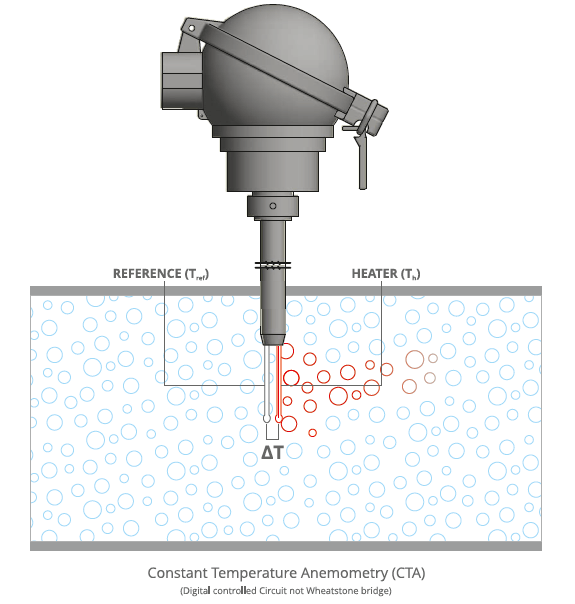
    Thermal mass (calorimetric) flow meters work on the physical principle of thermal dispersion from a heated element to the ambient medium (e.g., air or gases). This is affected by the velocity, density (temperature and pressure) and by the characteristic of the medium. The amount of needed energy is a function of the temperature difference ∆T and the mass flow.

    Gas flowing through two RTD Pt-100 one reference (Tref) and another Heater (Th). The temperature difference (over temperature) ∆t between the reference sensor (medium temperature) and the heater sensor is controlled constant. As per King’s Law, higher the mass flow rate, higher the cooling effect of the heater sensor, thus higher the power required to maintain the differential temperature constant. Therefore, the heater power is proportional to the gas mass flow rate.
    Advantages of Insertion Thermal Mass Flow metering technology against conventional flow metering

    • Pipe sizes suitable 15mm to 10 metres
    • Easy Installation, orientation & rugged design with customized sensor material design
    • Working temperature upto 400⁰C & 16barg or higher can be achieved
    • Better accuracy < ±2%RD of mass flow rate
    • Highest turn down ratio 100:1 or better, too sensitive throughout flow ranges.
    • No pressure drop saves energy (pressure) loss
    • Versatile & Cleanable sensors (auto-purging) design
    • Can be used with too low upstream straight length with special installation procedure
    • Low cost of ownership against other flow technology

    Conclusion

    Cement plant mainly consists of large duct with blowers (FD & ID Fan) where conventional flow measurement is done with Differential pressure sensor as primary elements such as Averaging Pitot tube, Orifice, Aerofoil etc. which are prone to clogg, insensitive to changes in flow velocity, and considerable pressure drop occurs with lower accuracy is now proved to be overall uneconomical to be used against Insertion Thermal Mass flow ( Heat dissipation technique) metering the latest development after long proven track record.

    Now further development on material compatibility with hot gas having heavy dust concentration and high abrasion are in progress which will satisfy most application demands in cement plants with few limitations of temperature upto 500⁰C. Still above 500⁰C operating temperature conventional technologies still rule the market. Hope this will help cement plant process operators to get benefit by implementing new technology against conventional flow measurement and acknowledge the benefits offered.

    Author

    Mr.Manish S Patel, A Chartered Mechanical Engineer with more than 24 years rich experience in process industries especially in flow measurement with a wide range of applications.

    Request to kindly write us your queries related to the flow measurement applications would be happy to assist at our best. For more information contact us.